From our video? This is the full story, with every source.
FBI says North Korea's fake video calls stole $400 million in crypto
The friend on the call is a stolen recording, and the audio fix installs malware. How the FaceStealer scheme works, according to the FBI, and the warning signs it says to watch for.
By The Providers DeskPublished 5 min read
In this story
The FBI says North Korean state hackers have stolen more than $400 million in cryptocurrency over the past 18 months with fake Zoom and Teams calls, in a scheme it calls FaceStealer.1 The friend on the screen is real footage, secretly recorded on an earlier fake call, and the “fix” for a sudden audio problem installs malware.1
The bureau published its warning on November 12, 2026, aimed at people who work in crypto and web3 and at people who maintain open-source software.1 It says it seized more than 900 of the stolen webcam videos, and the Justice Department seized the cloud infrastructure that held them, CyberScoop reported the same day.13
Read the video transcript
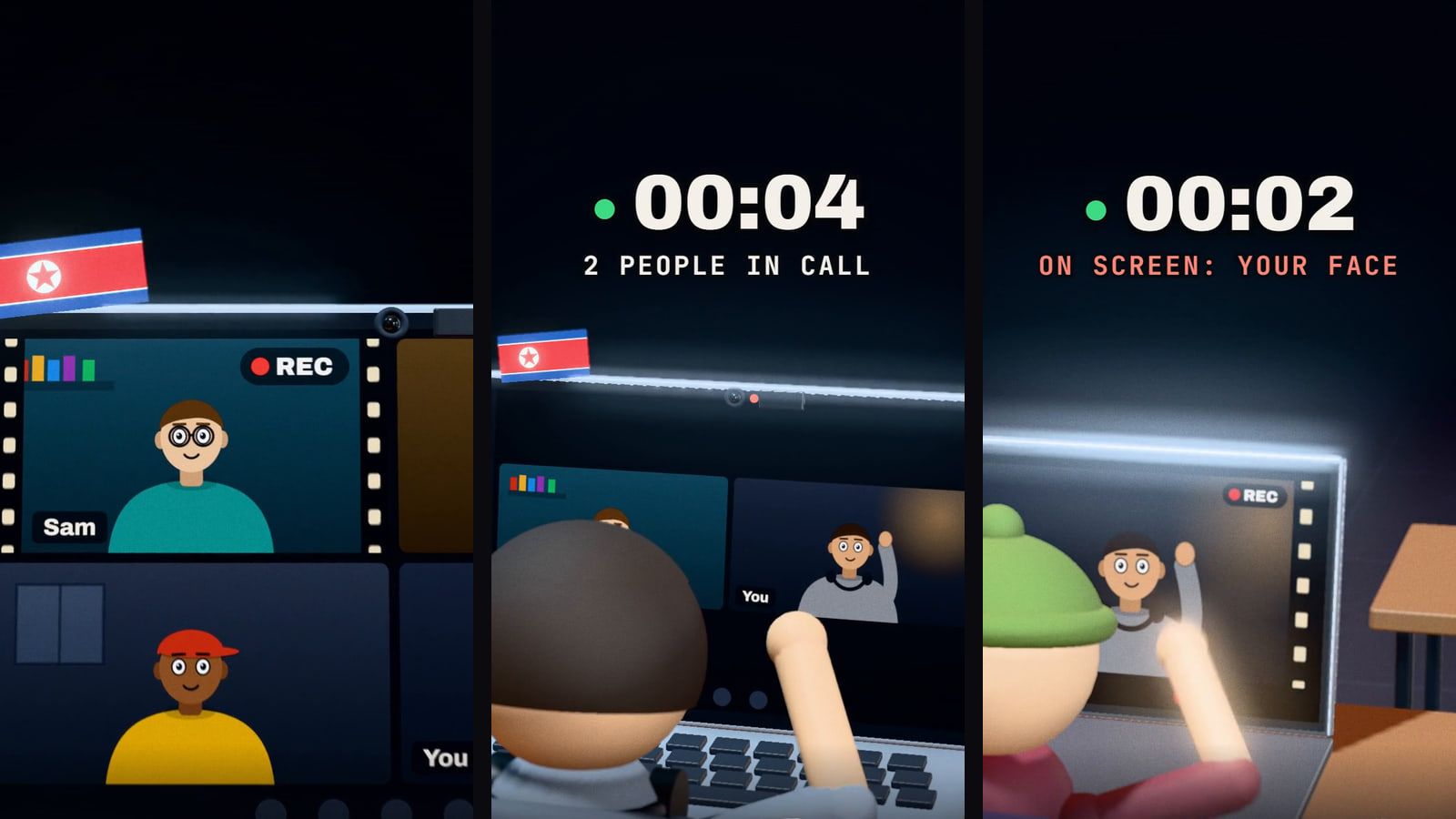
North Korea stole over $400 million by faking your friends on video calls, the FBI says. The face on the screen was real. It just wasn't live.
It starts with your friend's Telegram account. The hackers already have it. They read your old chats and write just like your friend. Long time! Quick catch-up call?
A calendar invite. Then, minutes before, a link. It looks like Zoom. It isn't. You join. There's your friend, smiling, nodding. A couple of colleagues too. But that's a recording, from your friend's own fake call. The day they got hacked.
Then a message pops up: we can't hear you. Run this quick fix. You run it. Now they see every key you type and everything on your screen. And your webcam has been recording you since you clicked the link.
They don't rob you that day. They wait, sometimes over a year, for your wallet to grow. Then they empty it. And your face? It becomes the friend on somebody else's call.
This month, the FBI went public. It calls the scheme FaceStealer: over $400 million in 18 months. Agents seized more than 900 of those webcam videos. Each one a real person, used as bait against their own friends.
Your face used to prove it was you. Now it can be stolen like a password. The FBI's advice: camera off until you can really talk. Check with them another way. And never run a fix for a meeting.
Who the FBI says is behind it
The FBI attributes FaceStealer to North Korean state-sponsored hackers known publicly by several names, among them Sapphire Sleet, BlueNoroff and APT38.1 Microsoft, which tracks the group as Sapphire Sleet, describes a North Korean state actor active since at least March 2020 that mainly targets cryptocurrency, venture capital and blockchain firms, with stealing crypto wallets as its main goal.5
Patrick Grandy, who runs the FBI’s Los Angeles field office, said the scheme is “capable of deceiving even the most experienced technical and security conscious computer user.”3
The advisory does not mention the October theft from Binance, which the FBI attributes to a North Korean group it calls TraderTraitor.13 That case is told step by step in our Binance account, and the money the government says it clawed back is in our story on the $1.2 billion seizure. More cases are in Heists & Hacks.
How a FaceStealer call works
The FBI lays the scheme out in six stages. It begins with someone already hacked, whom it calls Victim A. The hackers have searched that person’s computer for wallets and seed phrases (the backup words that unlock a crypto wallet), locked them out of Telegram or a similar chat app, copied their contacts and chat history, and recorded them on webcam while they waited for a call to start.1
Posing as Victim A, the hackers message that person’s contacts to “catch up,” “discuss collaboration,” or “talk about investment opportunities,” using old chats to sound right.1 A Calendly invite sets the time, but the meeting link arrives only shortly before the call. It points to a typo-squatted address, a deliberately misspelled lookalike such as uu01webzoom[.]us or teams.livemeet[.]us, that serves a copy of Zoom or Teams.1
- 01HijackAn earlier victim's chat account, contacts and webcam recording are taken.
- 02InviteA friendly message, a scheduling invite, then a lookalike meeting link sent late.
- 03ReplayThe recorded friend plays on screen, often with clips of other 'participants'.
- 04FixAn 'audio problem' leads to a script or update that installs malware. The new victim feeds the next round.
Source: [1]
Once the target is admitted, the hackers play Victim A’s recording, frequently with extra videos so the call looks crowded.1 A chat message then claims the target cannot be heard and walks them through an “update,” a script, or code pasted into the terminal. That installs a browser cookie harvester, keyloggers, screen capturers and a backdoor, and the fake site has been recording the target’s webcam since the link was clicked.1
The patience is unusual. In several cases, the FBI says, the hackers stole crypto “months to over a year after the initial compromise,” waiting for wallet balances to grow.1 The new victim’s footage and contacts feed the next round, so “the pool of targets and victims grows exponentially.”1
Read also How North Korea makes money: fake IT workers, ransomware, fake job offers
Deepfakes, and a near miss for open-source software
Most calls still use genuine stolen footage, the FBI says, but the group has begun using AI to make deepfake videos of well-known people in crypto and web3 from their public photos and clips.1 “The quality of the deepfakes only needs to be good enough to pass as webcam video,” the advisory says.1
The same trick has been aimed at software maintainers, whose code is downloaded by millions of other people. Earlier in 2026, according to the FBI, the maintainer of a major open-source JavaScript library joined a fake Teams call that included someone he recognized, followed the “corrective” steps and infected his computer.1 The hackers used his access to add malicious code to a library downloaded tens of millions of times a week before the compromise was quickly caught. The FBI also reports attempts against maintainers on npm, the main JavaScript package registry, and against maintainers of Rust crates.1
None of this is entirely new. In June 2025, BleepingComputer described a fake Zoom meeting with deepfakes of a tech firm’s senior leaders, a microphone that “didn’t work,” and a “Zoom extension” fix that was really malware.6 In April 2026, Microsoft analyzed a Sapphire Sleet intrusion that started with a file called “Zoom SDK Update.scpt.”5
Timeline
- Jun 2025
BleepingComputer reports a fake Zoom meeting with deepfakes of a tech firm's leadership and a malicious 'Zoom extension' fix.6
- Apr 16, 2026
Microsoft publishes its analysis of a Sapphire Sleet intrusion that began with a file named 'Zoom SDK Update'.5
- 2026
The FBI says a major JavaScript library's maintainer is infected through a fake Teams call; the attack is caught quickly.1
- Nov 12, 2026
The FBI warns about FaceStealer: more than $400 million stolen in 18 months and over 900 victim videos seized.1
- Nov 12, 2026
The Justice Department seizes the cloud infrastructure behind the scheme, CyberScoop reports.3
- Nov 12, 2026
Arctic Wolf counts 677 people in 58 countries in the group's target material.2
How many people were targeted
The FBI has not said how many people lost money. The security firm Arctic Wolf, which the FBI credits in its advisory, published its own count the same day.12
- 677
- people in the target material
- 58
- countries
- 84%
- founders or C-suite executives
Source: [2] · Counts of people the attackers prepared material against, not confirmed compromises.
That is up from more than 400 targets across 20 countries in the firm’s April report.2 Arctic Wolf also flagged 349 videos in the group’s media library as “likely modified,” and says they can no longer be told apart from real webcam footage by eye.2
The warning signs, and what the FBI says to do
Taken together, the FBI’s description and advice point to a short list of signs that a call may be one of these:1
- An invite from a contact you rarely hear from, about catching up, collaborating or investing.
- A scheduling invite with no meeting link, then a link that arrives shortly before the call.
- A link that opens a web page instead of your Zoom or Teams app, or an address that is slightly off.
- An audio problem only you seem to have, with a fix that asks you to run a script, paste a command or install an update.
The FBI’s recommendations: join through the official app using an invite code; keep your camera off until you can see, hear and talk with the person who invited you; and confirm the meeting another way, for example by text or phone if the invite came on Telegram.1 Never run scripts or paste code to update a meeting app; update it separately. Add multifactor authentication and login alerts to chat apps, keep only small sums in browser-extension wallets, and keep recovery phrases off your devices.1
If you think you were hit, the FBI says to create a new wallet with a new seed phrase on a device you did not use with the hackers and move your funds, log out all sessions and change passwords, warn your contacts and your employer, and file a report at ic3.gov with the keyword “FaceStealer.”1
How this story was made: researched and drafted with AI tools from the sources listed below, then checked against those sources claim by claim before publication. The Providers is responsible for everything published here. How we use AI · Report an error. The Providers reports and explains. This is not financial, legal or investment advice.
Sources
Every number and claim above links to one of these. Primary sources are documents from the people or institutions involved.
- 1FBI / Internet Crime Complaint CenterPrimaryNorth Korean Hackers Use Secretly Recorded Webcam Library of 900+ Tech Workers in $400M "FaceStealer" Crypto Theft Scheme (FLASH AC-111226-MS)Nov 12, 2026
- 2Arctic Wolf LabsPrimaryStill in the Meeting: BlueNoroff Six Months OnNov 12, 2026
- 3CyberScoopUS seizes North Korean hacking infrastructure, $1.2 billion in cryptocurrency stolen from BinanceNov 12, 2026
- 4BleepingComputerUS disrupts North Korean campaign behind $400 million crypto theftNov 14, 2026
- 5Microsoft Threat IntelligencePrimaryDissecting Sapphire Sleet's macOS intrusion from lure to compromiseApr 16, 2026
- 6BleepingComputerNorth Korean hackers deepfake execs in Zoom call to spread Mac malwareJun 18, 2025
Follow the cases
A new case every day, as a 90-second video.
Know a story we should open? Suggest a case.
More cases like this

Case 006 · Heists & Hacks
How North Korea makes money: fake IT workers, ransomware, fake job offers
Case 015 · Heists & Hacks
Prosecutors say AI clones of CEOs' voices and faces took $129 million

Case 014 · Heists & Hacks