From our video? This is the full story, with every source.
Prosecutors say AI clones of CEOs' voices and faces took $129 million
US prosecutors have charged three men with using AI to pose as company CEOs and law-firm lawyers on calls so that staff would wire money abroad. The men are presumed innocent.
By The Providers DeskPublished 5 min read

In this story
US prosecutors say three men used artificial intelligence to copy the voices, and sometimes the faces, of company chief executives on calls, persuading employees to wire away more than $129 million between 2024 and 2026.12 The indictment, announced in Manhattan on November 5, 2026, charges them with wire fraud, aggravated identity theft and money laundering.12 The men are presumed innocent unless proven guilty in court.
The FBI’s definition of business email compromise, the scam of tricking staff into sending company money, covers more than email: its annual report includes schemes run through phone numbers and “virtual meeting applications.” Victims reported about $3.05 billion in such losses to the FBI in 2025, and the bureau lists voice cloning among the ways AI can be used in them.5
How the scheme worked, according to prosecutors
The Associated Press, summarizing the indictment, reported that the group targeted accounting departments, starting with emails that posed as a company’s CEO and asked for help with a confidential financial transaction.2 The Justice Department says the men then contacted employees while pretending to be their company’s CEO, used AI to mimic the CEO’s voice or image on calls, and asked for urgent help with that transaction.12 The announcement calls the technology “super intelligence,” or SI.1
The second step, prosecutors say, was meant to make the deal look legitimate. According to the Justice Department, the fake CEO told the employee to speak with lawyers at large international law firms supposedly working on the deal, and members of the group impersonated those lawyers too, including with AI.1 Prosecutors say Jacob Soall mainly impersonated lawyers based in the United Kingdom.1
Investigators recovered a handwritten script in Soall’s possession titled “Lawyer Call,” which the Justice Department says included language meant to persuade employees not to discuss the calls with coworkers.124 One line, as quoted by GovInfoSecurity, read: “Legal and regulatory perspective confidentiality is a great priority.”4
The employees were then directed, prosecutors say, to wire money to bank accounts the group controlled in at least nine countries: the United States, Spain, Portugal, Greece, the United Arab Emirates, Singapore, Austria, Slovakia and China.14 Prosecutors say the money was then converted into cryptocurrency to hide where it came from and who owned it.12
The money
The Justice Department’s announcement describes six victims by type and location, without naming the companies.1
Show the data
| Item | Value |
|---|---|
| UK financial technology company | $11.58M |
| Florida pet food company | $5.24M |
| Missouri hospital system | $4.83M |
| Massachusetts mutual fund company | $4.64M |
| California hospital system | $2.97M |
| Rhode Island bank | $2.68M |
Sources: [1], [3], [8] · Together about $31.9 million. The announcement lists these six; prosecutors put the overall total at more than $129 million.
The AP reported that, over more than a year and a half, the group targeted thousands of companies worldwide.2 The Justice Department says Sharon Hazan boasted in communications that he had been laundering money since 1994, had laundered more than $400 million in just the past three years, and was “number one all over the world.”14 The Record described the boast differently, as $400 million laundered since 1994.3
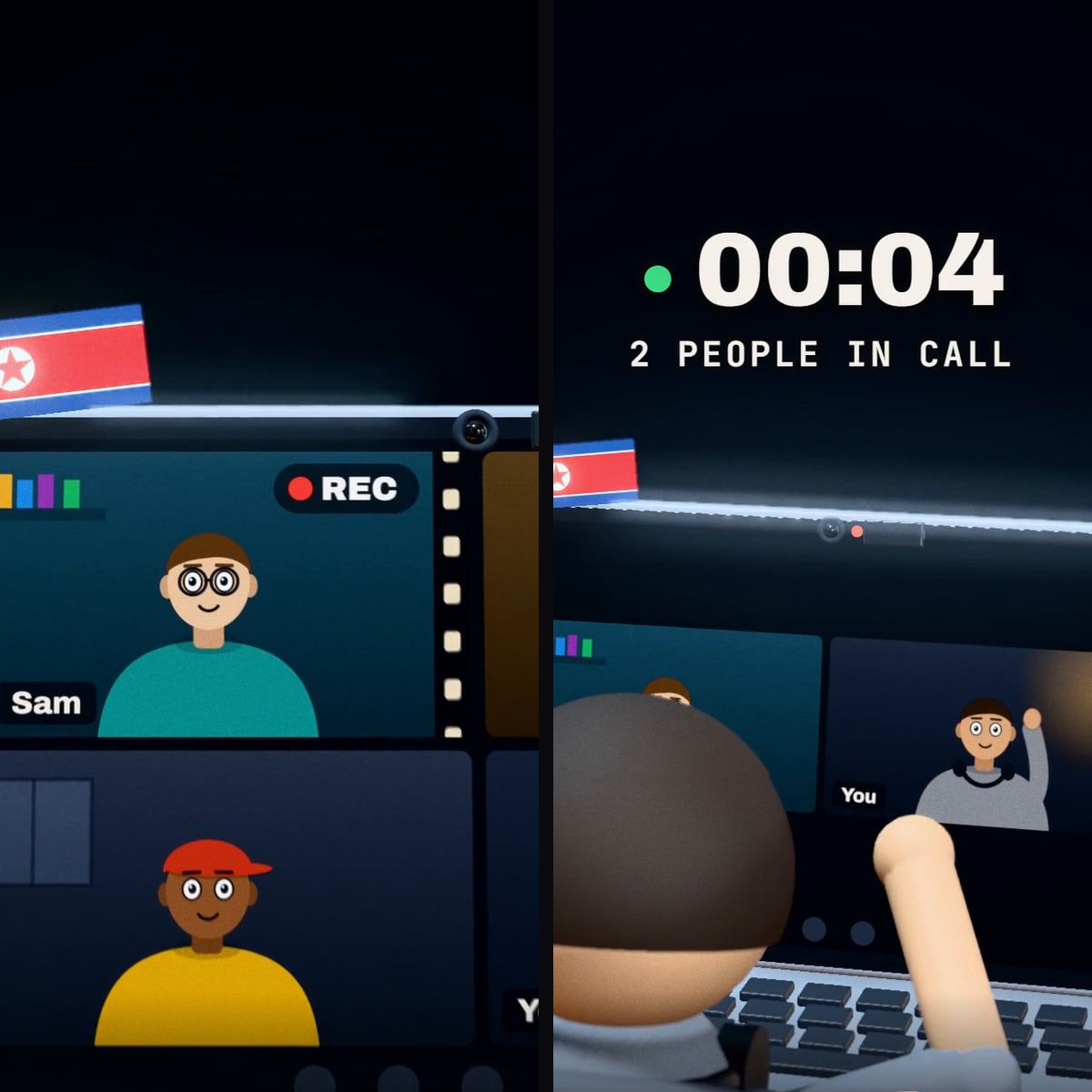
Read also FBI says North Korea's fake video calls stole $400 million in crypto
Timeline
- 2024
The scheme begins, according to the indictment, which says it ran from at least about 2024 into 2026.1
- Jun 17, 2026
Jacob Soall is arrested in Spain.1
- Aug 5, 2026
Sharon Hazan is arrested in Spain.1
- Sep 7, 2026
Guy Sheetrit is arrested in the United Kingdom.1
- Nov 5, 2026
Prosecutors in the Southern District of New York announce the unsealed indictment.2
Who is charged, and what they say
The indictment names Soall, 41, Hazan, 54, and Guy Sheetrit, 42, the AP reported.2 Soall was arrested in Spain on June 17, 2026, Hazan in Spain on August 5, and Sheetrit in the United Kingdom on September 7. Extradition requests for all three are pending.13
The indictment brings seven counts: conspiracy to commit wire fraud, wire fraud, two counts of aggravated identity theft, money laundering conspiracy and two counts of money laundering.4 Wire fraud and money laundering carry up to 20 years each and aggravated identity theft two years, for a combined maximum of 104 years if convicted on every count.23
Lawyers for Sheetrit denied the charges and described him as a businessman with expertise in cybersecurity and technology, The Record reported.3 His attorneys told CyberScoop he “has no connection to this matter and has had no involvement in it whatsoever” and “maintains his complete innocence.”8 The AP said lawyers for Soall and Sheetrit did not immediately respond to its request for comment and that it was unclear whether Hazan had a lawyer.2
“As criminals continue to weaponize emerging technologies, the FBI remains committed to rapidly adapting our capabilities,” said James C. Barnacle Jr., the head of the FBI’s New York field office, according to the AP.2 The FBI urged other companies that may have been victims to come forward, The Record reported.3
How common this fraud is, and what victims can do
Figures reported to the FBI give a sense of scale, with a caveat: they count only crimes that victims report, and they cover one year, while the alleged scheme ran for about two.5
- $129M+
- alleged in this one case, 2024 to 2026
- $30M+
- business email compromise losses involving AI reported to the FBI in 2025
- $3.05B
- all business email compromise losses reported to the FBI in 2025
The FBI’s 2025 report counted business email compromise losses of $3.05 billion, up from $2.77 billion in 2024.5 It said businesses reported more than $30 million in losses to such scams involving AI in 2025, and noted: “Voice cloning can also be used to request wire payment.”5
Speed matters once a fraudulent wire has gone out. The FBI’s advice is to contact your bank immediately and ask it to recall the funds, then file a complaint at ic3.gov with the full transaction details, whatever the amount.5 Its Recovery Asset Team, which asks banks in the US and abroad to freeze money, says it froze about $679 million in 2025 through that process.5
Deepfake calls had already cost companies before this case. In May 2024, the engineering firm Arup confirmed that an employee in its Hong Kong office had transferred $25.6 million over 15 transactions after a video call with deepfakes of its chief financial officer and other staff. “We can confirm that fake voices and images were used,” the company said, as quoted by Fortune.6
Familiar faces on a screen are also the bait in a separate case: the FBI says North Korean state hackers replay stolen webcam clips of people’s contacts on fake Zoom and Teams calls, which we explain in how the FaceStealer calls work.7 Borrowed identities are likewise central to North Korea’s fake remote IT workers. More cases are collected in Heists & Hacks.
How this story was made: researched and drafted with AI tools from the sources listed below, then checked against those sources claim by claim before publication. The Providers is responsible for everything published here. How we use AI · Report an error. The Providers reports and explains. This is not financial, legal or investment advice.
Sources
Every number and claim above links to one of these. Primary sources are documents from the people or institutions involved.
- 1US Attorney's Office, Southern District of New YorkPrimaryThree Foreign Nationals Arrested And Charged In Scheme To Use "Super Intelligence" To Defraud Victims Of Over $129 MillionNov 5, 2026
- 2Associated Press (via KSAT)3 charged in scheme to use AI to impersonate CEOs and attorneys to steal $129 millionNov 5, 2026
- 3The RecordCEO-spoofing scammers used AI to help steal more than $100 million, feds sayNov 6, 2026
- 4GovInfoSecurityDeepfake CEO Impersonation Scam Steals $129M From CompaniesNov 9, 2026
- 5FBI / Internet Crime Complaint CenterPrimary2025 IC3 Annual ReportApr 2026
- 6FortuneA deepfake 'CFO' tricked the British design firm behind the Sydney Opera House in $25 million scamMay 17, 2024
- 7FBI / Internet Crime Complaint CenterPrimaryNorth Korean Hackers Use Secretly Recorded Webcam Library of 900+ Tech Workers in $400M "FaceStealer" Crypto Theft Scheme (FLASH AC-111226-MS)Nov 12, 2026
- 8CyberScoopAuthorities accuse trio of using AI deepfakes to defraud $129M from businessesNov 6, 2026
Follow the cases
A new case every day, as a 90-second video.
Know a story we should open? Suggest a case.
More cases like this
Case 013 · Heists & Hacks
FBI says North Korea's fake video calls stole $400 million in crypto

Case 006 · Heists & Hacks
How North Korea makes money: fake IT workers, ransomware, fake job offers

Case 014 · Heists & Hacks