From our video? This is the full story, with every source.
Officials see no sign of a hack in US flight halt; Google says AI hacks alone
A network failure halted US departures for four hours on November 13, and officials see no sign of a cyberattack. The same week, Google and the FBI documented hacking run by AI.
By The Providers DeskPublished 5 min read

In this story
Two things happened in the same week of November, and they are separate stories. On November 13, the Federal Aviation Administration halted departures across the US for more than four hours after its telecommunications network failed, and the agency says it has “no indication that this was a cyberattack.”16 Three days later, Google’s Threat Intelligence Group reported the first case it has seen of attackers using AI to find and exploit software flaws “without a human in the loop.”3
The outage showed how much of daily life runs on old network gear. The AI reports show attackers getting faster. No investigator or official has linked the flight stoppage to hacking of any kind, so this article keeps the two apart.
What stopped US flights on November 13
The FAA says its network had a technical problem at about 3:30 p.m. Eastern on Friday, November 13, and it ordered a nationwide ground stop on departures just before 4 p.m.18 More than 3,500 aircraft were in the air at the time, Transportation Secretary Sean Duffy said, and medical flights, critical cargo and law enforcement were exempted, AVweb reported.7 The stop was lifted at 8:15 p.m.6 CNBC called it the longest halt to US departures since the September 11 attacks.4
The FAA counts about 12,462 cancellations that Friday, including 9,082 by major airlines, and notes that “not all cancellations were directly caused” by the ground stop.1 The flight tracker FlightAware counted more than 9,100 canceled flights that day, FOX Weather reported.8
The cause, as investigators describe it so far, is a piece of new equipment. L3Harris, the FAA’s main telecommunications contractor, installed a router at a facility in El Dorado, Arkansas, and within eight minutes it began sending too much data across the network, investigators told CNBC.4 The FAA says the flood reached “1,000 connection attempts every 4 to 5 seconds,” and that older equipment became unstable under it.15
Was it a hack? What officials have said
Every official statement so far points away from an attack. “Based on all available evidence, we have no indication that this was a cyberattack,” the FAA says.1 Duffy said on November 15, “We have no indication that this was a hack,” and that the FBI was offering assistance; Fortune noted he did not rule out a cyberattack entirely, saying “we’re open” if something else turns up.9
Homeland Security Secretary Markwayne Mullin said “there’s no chatter, we haven’t seen any footprints,” while adding, “we’re still looking, so we’re not going to rule that out,” SecurityWeek reported.6 Duffy also ruled out the FAA’s AI-based SMART advisory system as a cause: “There’s no possible way SMART would have impacted what happened,” he said, according to AVweb.7
The FAA has paused installing the routers linked to the ground stop, turned off any of the Juniper-made units already in place, and is relying on “older Cisco routers that have been in place for 25 years,” the Associated Press reported.5 Senate Democrats asked for router replacements to stop until “the root cause of the failure has been identified.”5 As of November 18, investigators had reproduced the overload but had “yet to determine exactly why” the routers failed, CNBC reported.4
The ground stop, as reported
- Nov 13 · 3:30 pm ET
The FAA's network has a technical problem, the agency says.11
- Nov 13 · before 4 pm
- Nov 13 · 8:15 pm
- Nov 15
The FAA says it has no indication the outage was a cyberattack.11
- Nov 17
The FAA pauses installing the routers linked to the outage.55
- Nov 18
Investigators say they reproduced the data overload; the root cause is still open.44
What Google says an AI did on its own
The AI story is in a report Google’s Threat Intelligence Group published on November 16. “In the past quarter, GTIG identified threat actors using LLM frameworks to fully automate vulnerability discovery and exploitation without a human in the loop for the first time,” it says.3 An LLM, or large language model, is the kind of AI behind chatbots.
Google found the system, which it calls exploit_agent, on an exposed staging server, a test machine the attackers left open. Data on the server suggested the operator was targeting French websites in media, entertainment and education.3 CyberScoop reports that Google’s attribution to Russian-speaking hackers rests on Russian-language comments in the code; no group or country is named.10
Read also FBI says North Korea's fake video calls stole $400 million in crypto
- 01WatchCompares popular web software before and after a security fix is announced.
- 02FindWorks out which flaw the fix closed.
- 03WriteDrafts an exploit, the code that attacks that flaw.
- 04RunExecutes it automatically, with no human step.
Source: [3]
Google also describes the limits. These frameworks “currently trade stealth for velocity,” the report says, leaving traffic and code traces that make detection more likely, though they “remain highly capable of achieving operational objectives.”3 After two PHP flaws were patched on October 21, “hundreds of claimed but non-functional” exploits appeared within days, likely written with AI help, Google says.3
The FBI’s warning about ARTEX
On November 13, the FBI issued a FLASH alert about ARTEX, which it describes as “an open-source, large language model (LLM)-driven agentic platform that threat actors have weaponized.”2 Since at least August 2026, the alert says, a variety of actors have used it against organizations in sectors including financial services, government, defense, energy, healthcare and telecommunications, “with some intrusions progressing from initial targeting to privileged access in under three hours.”2
The FBI says ARTEX lets attackers “with minimal technical expertise” run complex operations against many targets at once. It lists attacks on South Korean financial institutions that exposed personal data of about 67,000 people, and a supply-chain compromise affecting ConnectWise Cloud Backup customers that led to attempted sign-ins to more than 2,250 downstream tenants, the customers’ cloud accounts.2
A developer called “Autumn-27” released ARTEX on GitHub in July 2026, stated it was meant for authorized security testing, and made the repository unavailable on October 8 after reports of abuse, according to the alert. Copies still circulate, and researchers counted more than 1,600 publicly exposed ARTEX consoles in early November.2 The FBI does not name a country or group; TechCrunch reports that Microsoft, which tracked one campaign, believes those attackers are likely Chinese.11
The number that jumped
A zero-day is a software flaw that attackers use before the maker has a fix. Google’s count of exploited zero-days barely moved for most of the year, then doubled in a single month.3
Show the data
| Item | Value |
|---|---|
| 2025 average | 8 |
| 2026 average before August | 11 |
| August 2026 | 22 |
Source: [3]
Google says overall vulnerability disclosures and exploits “nearly doubled between January and August 2026,” while zero-day exploits “rose only marginally” before the August spike.3 The report does not say how many of the August cases involved AI. For other ways criminals already use AI against companies, see our AI coverage and how hackers poisoned an AI coding tool before the Binance theft.
How this story was made: researched and drafted with AI tools from the sources listed below, then checked against those sources claim by claim before publication. The Providers is responsible for everything published here. How we use AI · Report an error. The Providers reports and explains. This is not financial, legal or investment advice.
Sources
Every number and claim above links to one of these. Primary sources are documents from the people or institutions involved.
- 1Federal Aviation AdministrationPrimaryNationwide Ground Stop: Questions and AnswersNov 15, 2026
- 2FBI (Internet Crime Complaint Center)PrimaryFLASH-20261113-001: Threat Overview of ARTEX Autonomous Penetration Testing FrameworkNov 13, 2026
- 3Google Threat Intelligence GroupPrimaryGTIG AI Threat Tracker: Agentic Threat Activity Crosses a Significant ThresholdNov 16, 2026
- 4CNBCFAA ground stop investigation: Engineers replicate network overloadNov 18, 2026
- 5MPR NewsFAA halts installation of routers that led to ground stop (Associated Press)Nov 17, 2026
- 6SecurityWeekNo signs of hacking in FAA ground stop as FBI reportedly probes software updateNov 14, 2026
- 7AVwebFAA nationwide ground stop liftsNov 13, 2026
- 8FOX WeatherThousands of flights canceled, delayed as US air travel slowly recovers from historic nationwide ground stopNov 14, 2026
- 9FortuneTransportation secretary still doesn't totally rule out that a cyberattack may have hit the FAANov 15, 2026
- 10CyberScoopGoogle says Russian-speaking hackers ran the first fully automated AI cyberattackNov 16, 2026
- 11TechCrunchFBI says Artex AI open source hacking tool used to breach networks in 'under three hours'Nov 16, 2026
Follow the cases
A new case every day, as a 90-second video.
Know a story we should open? Suggest a case.
More cases like this
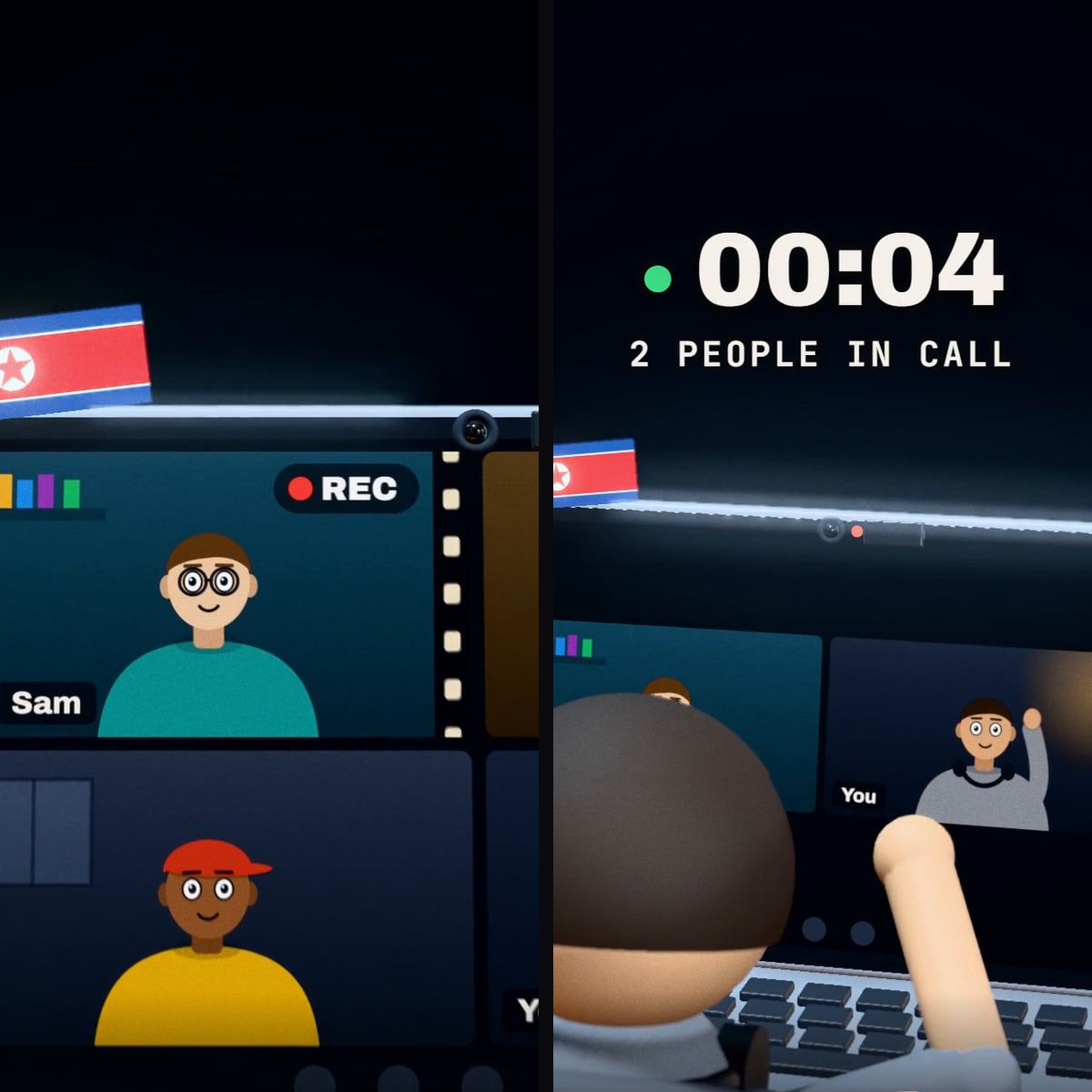
Case 013 · Heists & Hacks
FBI says North Korea's fake video calls stole $400 million in crypto

Case 004 · Heists & Hacks
How North Korea-linked hackers took $6.34 billion from Binance