From our video? This is the full story, with every source.
Why the Binance hackers made six meme coins for about $90 each
Launderers moving the Binance loot minted six joke tokens, bought them with stolen money and sold them from other wallets. How the trick works, and why Elliptic says it only buys time.
By The Providers DeskPublished First told as a video on Nov 12, 20265 min read
In this story
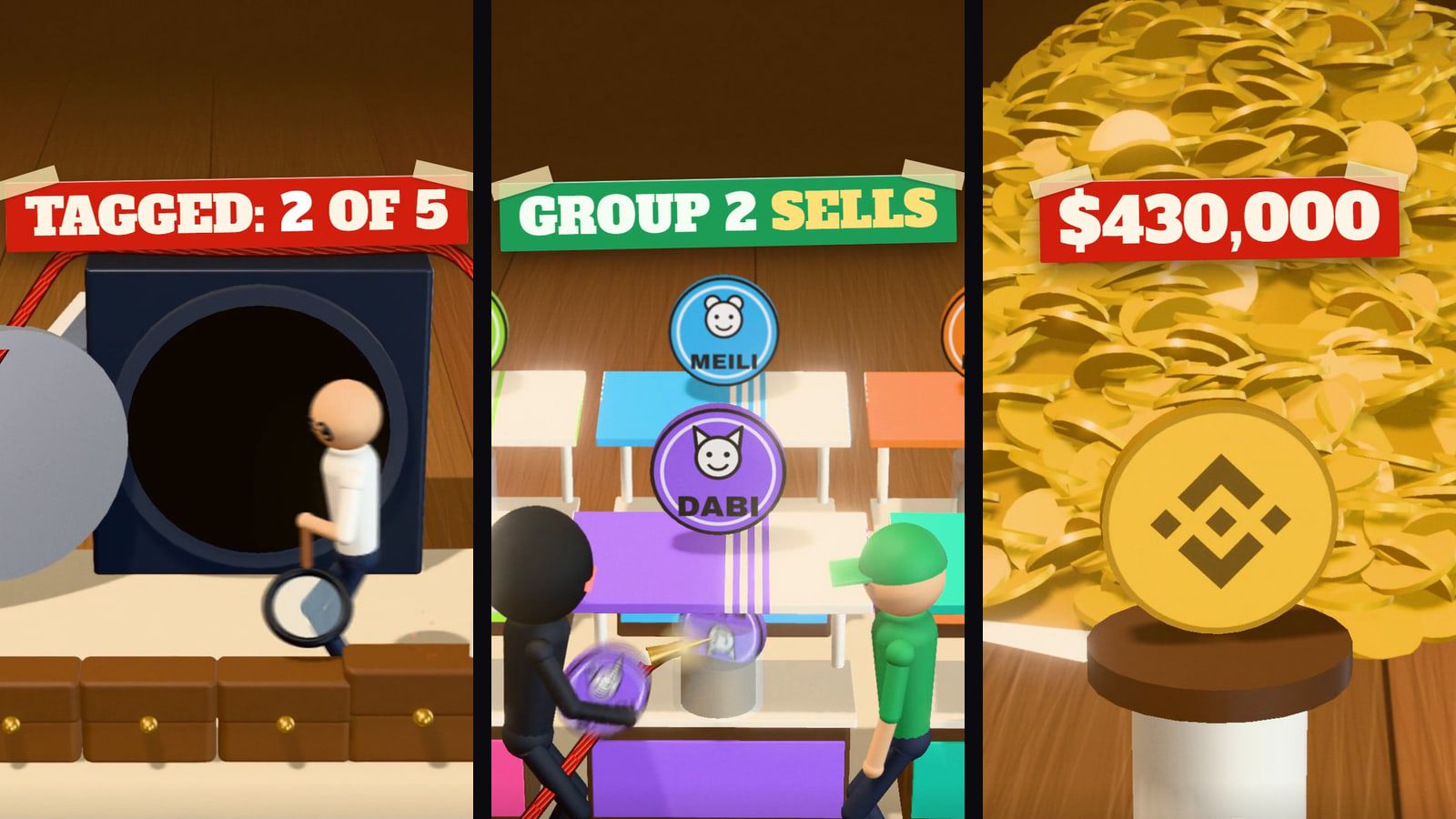
Because a home-made meme coin is a cheap, disposable container for moving dirty money. Between November 5 and 7, the people laundering the Binance theft created six new tokens on the NEAR blockchain, each for about 25 NEAR, or around $90, according to the blockchain analytics firm Elliptic.1 One set of wallets bought the tokens with stolen NEAR, a second set sold them back for clean-looking NEAR, and about $430,000 passed through before the coins were abandoned.1
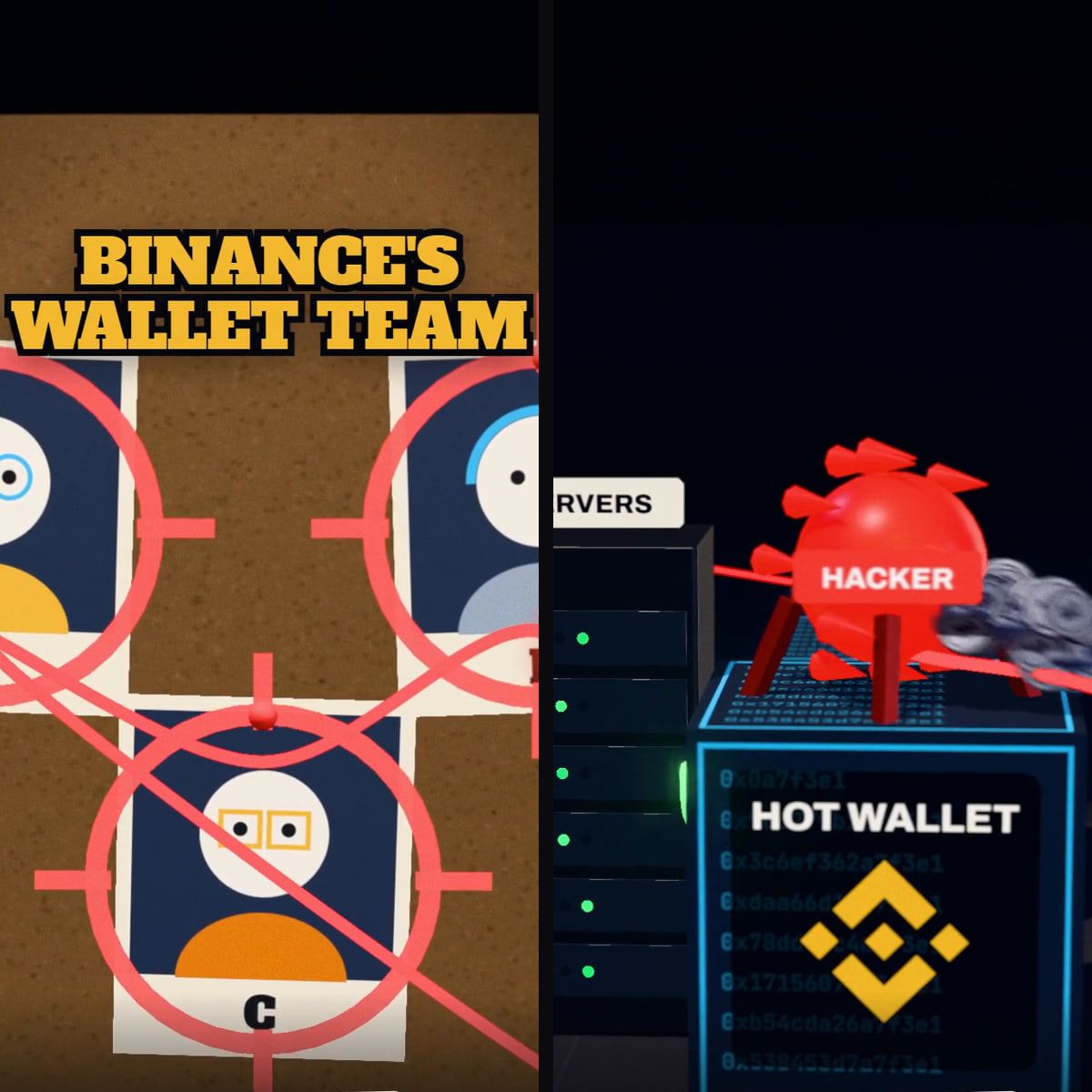
The money comes from the October 29 theft of $6.34 billion, by Binance’s count, from the exchange’s hot wallets.3 The FBI attributes it to North Korea’s TraderTraitor group; North Korea’s Kim Yo Jong called the accusation a political provocation.78 We explain the break-in in how the hackers took $6.34 billion from Binance and keep every development in the Binance heist case file. This story is about one small, strange detour on the way out.
Read the video transcript
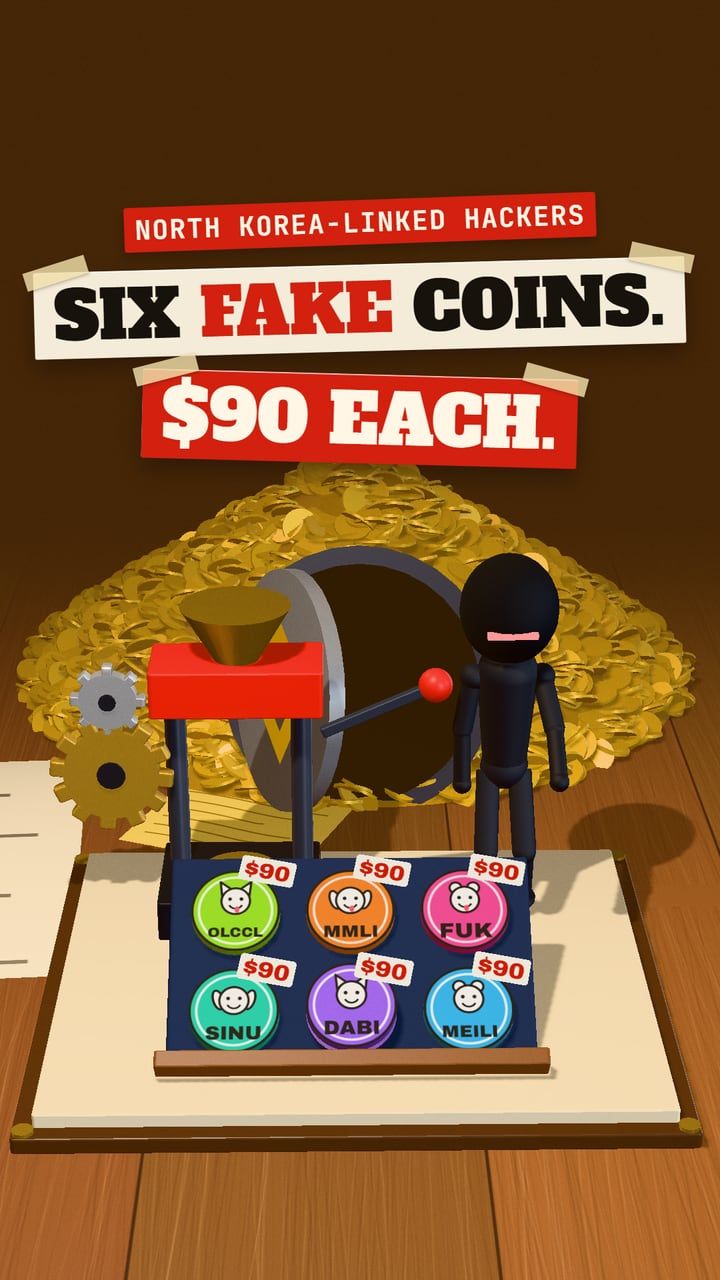
North Korea-linked hackers just launched six meme coins. Each one cost about $90 to make. And they were bought with money from the $6.34 billion Binance heist. Here's the trick hidden inside them, and the $3 billion problem they can't solve.
October 29. The money leaves Binance, and the FBI blames North Korea. Every move is public. Trackers tag each wallet it touches, and $2.85 billion gets frozen. So the rest needs wallets that look clean.
November 5. On a blockchain called NEAR, a brand-new coin appears. Two days later there are six, with names like DABI and SINU. One group of wallets spends stolen money buying the worthless coin. A second group sells the same coin back and takes the money out. On the record, they never touched the theft. They're just traders who got lucky on a meme coin. Elliptic says about $430,000 went through the six. November 8. Four of the makers pull out what's left, and none of the six has traded since.
So did it work? Not really. Every trade is public, and Elliptic traced all six. It says the coins don't hide the money. They buy time, because every hop slows the chase. And $430,000 is nothing. About $3 billion still sits in wallets linked to the hackers, and Elliptic says almost none of it has become cash.
What a meme coin is
A meme coin is a crypto token built around a joke, a character or a trend. The US Securities and Exchange Commission’s staff describe one as “a type of crypto asset inspired by internet memes, characters, current events, or trends,” whose value is “driven primarily by market demand and speculation,” and which typically has “limited or no use or functionality.”5 The SEC staff view is that a meme coin is not itself a security, though fraud around one can still be prosecuted.5
Making one costs almost nothing. Anyone can create a token with the public tools on most blockchains, and Elliptic notes that thousands of new tokens appear every day.1 Chainalysis counted 2,063,519 tokens launched in 2024 alone, and found that only 1.7% had been actively traded in the previous 30 days.6 A token that lives for a day and dies is normal background noise.
That is the cover the launderers used. North Korea’s launderers, Elliptic writes, have found a different use for meme coins: “creating tokens that nobody else wants to buy.”1
How six coins move stolen money
Each new token was paired with NEAR in its own liquidity pool, a pot of two tokens on a decentralized exchange that lets anyone swap one for the other at a price set automatically by what is in the pot.1 One group of wallets paid stolen NEAR into the pool and received the new token. A second group of wallets sold the token back into the same pool and withdrew the NEAR.1 “At no point do the stolen funds move directly from a buying wallet to a collecting wallet, because the pool sits in between,” Elliptic wrote.4
On paper, the collecting wallets look like ordinary traders who got lucky on a meme coin. The wallets carried random names given by a popular wallet app, so the names did not link them; their funding did.1
- 01Fund a creatorA wallet that has just sold an earlier token pays a new creator, 2 to 13 minutes before launch.
- 02Mint and pool~$90The creator makes a token for about 25 NEAR and pairs it with NEAR in a pool.
- 03Buy inWallets holding stolen NEAR pay it into the pool for the new token.
- 04Sell outOther wallets sell the token back and withdraw real NEAR.
- 05AbandonWithin hours the token goes quiet; the leftover NEAR is pulled and funds the next creator.
Source: [1]
The six tokens were FUK, OLCCL, MEILI, MMLI, DABI and SINU.1 The Block reported that most had animal mascots and one carried an “Elon 2028 President” banner; Elliptic said there was no suggestion that Elon Musk was linked to it.4 Every token followed the same pattern: created, traded heavily within hours using stolen NEAR, then abandoned, with each first sold within three hours of launch.1 Five of the six creators were funded by a wallet that had already been selling an earlier token, so the proceeds of one coin paid for the next.1
Read also Where $6 billion in stolen crypto actually goes: the Binance loot, traced
Timeline
- Oct 29
Attackers drain Binance's hot wallets; Binance later puts the assets affected at $6.34 billion.33
- Nov 5 · 00:25 UTC
The first token, FUK, is created on NEAR and paired with NEAR in its own pool.1
- Nov 6
Four more tokens, OLCCL, MEILI, MMLI and DABI, are created between 07:19 and 14:27 UTC.1
- Nov 7 · 10:06 UTC
The sixth token, SINU, is created.1
- Nov 8
The creators of four tokens withdraw what is left in their pools. None of the six trades again.1
- Nov 9
Elliptic publishes its findings; about 117,000 NEAR, around $430,000, has passed through the six tokens.1
Small money, on purpose
The sums are tiny. About 117,000 NEAR, worth around $430,000, passed through the six tokens, while about 11.8 million NEAR from the theft, around $43.7 million, had not moved at all when Elliptic published.1 Across the whole theft, Elliptic counts $2.85 billion frozen or seized and about $2.45 billion still in addresses linked to the theft as of November 19 (its early-November updates put it above $3 billion, the figure in our video), and says a negligible amount has likely been cashed out.2
- $90
- to create one token (about 25 NEAR)
- $430,000
- passed through all six tokens by November 9
- $2.45B
- still in addresses linked to the theft on November 19
Elliptic’s verdict is that the method “does not hide the funds so much as slow down the people tracing them.”1 Laundering is a race to move money before its addresses are flagged, and every extra hop costs investigators time. On the afternoon of November 8, the creators of four tokens withdrew the liquidity left in their pools, and none of the six has traded since.1 Elliptic’s live tracker, updated through November 19, reports no new token activity after that, only small amounts of NEAR still moving between November 11 and 13.2
The trick is not new. Elliptic says it first saw it in the laundering of the 2025 Bybit theft, also attributed to TraderTraitor, when the launderers created a worthless token on Tron, paired it with a stablecoin and moved at least $24 million.1 It also found a close variant on Solana, where stolen SOL was swapped into wrapped and thinly traded tokens before being sold for USDC.1
What gives the trick away
Because every trade is recorded on a public blockchain, Elliptic could identify all six tokens and both sets of wallets.1 Its advice to exchanges is not to treat money arriving from a liquidity pool as clean by default, and to ask what went into the pool, not only who paid out.1 The warning signs it lists are very new tokens, pools with few traders, wallets that only buy or only sell, and new wallets funded shortly before trading, often in round amounts.1
Those checks matter at the point where crypto becomes cash. Elliptic’s forecast is that the stolen funds will reach cash through private over-the-counter brokers, and that this will take months.2 We follow that road in where the stolen Binance crypto went, and the government’s side in the US seizure of $1.2 billion. Other cases like this one are in our heists section.
How this story was made: researched and drafted with AI tools from the sources listed below, then checked against those sources claim by claim before publication. The Providers is responsible for everything published here. How we use AI · Report an error. The Providers reports and explains. This is not financial, legal or investment advice.
Sources
Every number and claim above links to one of these. Primary sources are documents from the people or institutions involved.
- 1EllipticPrimaryNorth Korea is minting meme coins to launder the Binance hackNov 9, 2026
- 2EllipticPrimaryHow North Korea is laundering the $6.4 billion stolen from Binance (live tracker, updated Nov 19, 15:30 UTC)Nov 19, 2026
- 3BinancePrimaryBinance Security Incident on October 30, 2026: Update on Preliminary Investigation Findings and ResponseNov 3, 2026
- 4The BlockBinance hack launderers mint homemade Elon Musk, animal memecoins to move stolen funds: EllipticNov 9, 2026
- 5US Securities and Exchange CommissionPrimaryStaff Statement on Meme CoinsFeb 27, 2025
- 6ChainalysisPrimaryMarket Manipulation: Suspected Wash Trading on Select Blockchains May Account for Up To $2.57 Billion in Trading VolumeJan 29, 2025
- 7The RecordFBI blames N. Korea's TraderTraitor for Binance theft, urges crypto industry to block transactionsNov 2, 2026
- 8ForkLogNorth Korea denies involvement in $6.3 billion Binance hackNov 3, 2026
Follow the cases
A new case every day, as a 90-second video.
Know a story we should open? Suggest a case.
More cases like this
Case 005 · Heists & Hacks
Where $6 billion in stolen crypto actually goes: the Binance loot, traced
Case 014 · Heists & Hacks
The US says it took $1.2 billion of the Binance loot. How do you freeze crypto?
Case 004 · Heists & Hacks