From our video? This is the full story, with every source.
Binance says a court ordered up to $6.5 billion frozen, anywhere on Earth
Binance says an Abu Dhabi court has ordered up to $6.5 billion of the loot frozen worldwide, against hackers nobody can name. What the order does, who must obey it, and why it rides on 26,000 wallets.
By The Providers DeskPublished 4 min read
In this story
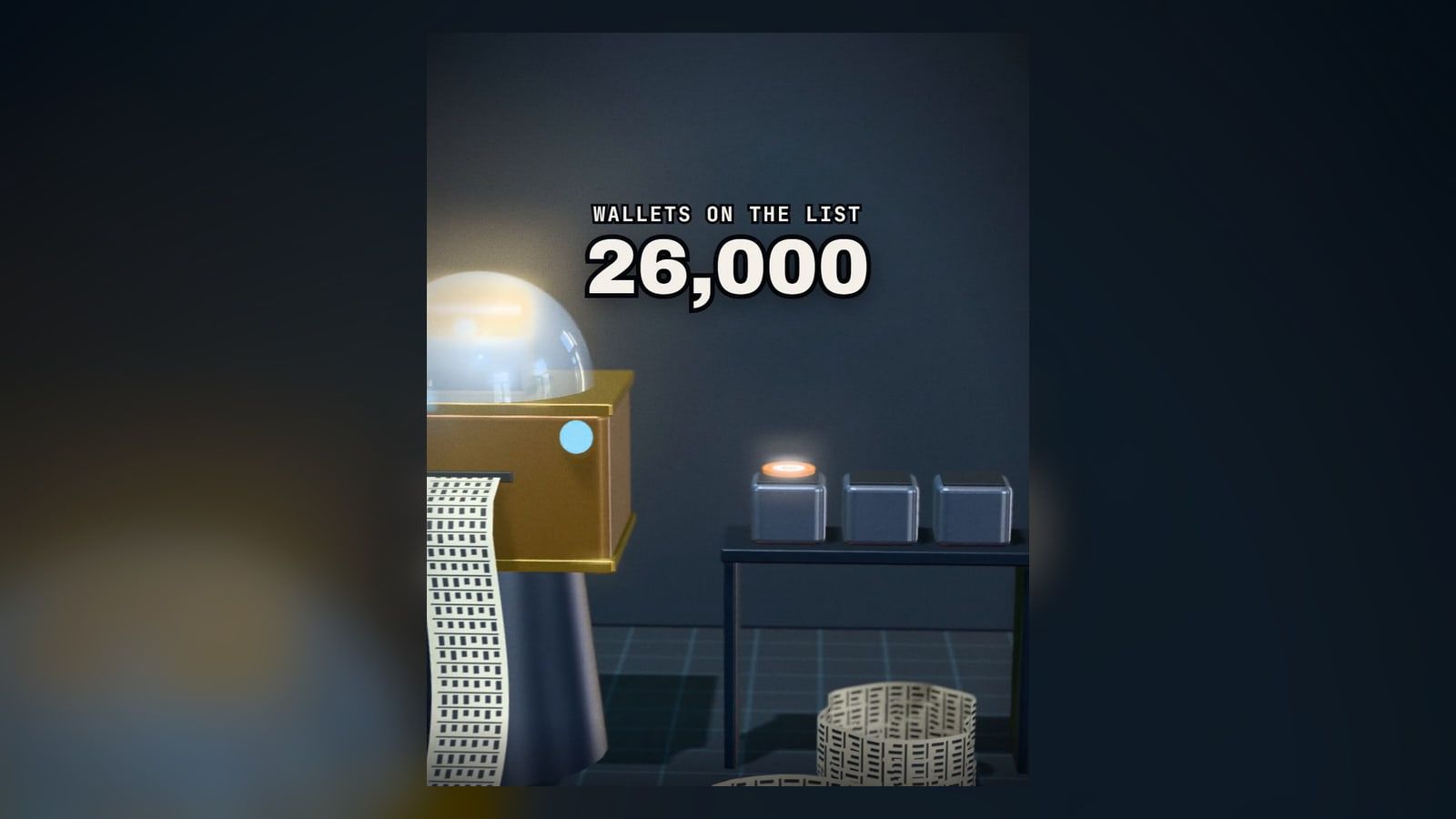
On November 18 Binance said an Abu Dhabi court had granted it an order freezing up to $6.5 billion of the stolen crypto, anywhere in the world. The worldwide freezing order, from Justice William Stone of the Abu Dhabi Global Market (ADGM) Courts, was issued against the unidentified people accused of the October 29 attack, and comes with a “living list” of 26,000 wallet addresses said to hold stolen assets.12 The court’s own date for the order has not been made public.1
The ceiling is above the whole theft: Binance puts the assets affected at $6.34 billion.3 The FBI attributes the theft to North Korea’s TraderTraitor group; North Korea’s Kim Yo Jong called the accusation a political provocation.1011 We tell the break-in in how the hackers took $6.34 billion from Binance and track every turn in the Binance heist case file. This is the legal chapter: what a freezing order can reach when the defendants have no names.
What the order is, and what it is not
A freezing order is an interim court order that restrains a party from removing, dealing with or disposing of assets; a worldwide one extends that restraint to every country.14 “The $6.5 billion is the amount covered by the injunction,” The Block reported; it is a ceiling, not money recovered.1 Binance has not said how much has been returned under it.2
The ADGM Courts work on a common-law foundation, applying English law principles, and Binance is regulated in the ADGM.1214 Third parties such as banks are generally not bound until they are served or notified, but notice often triggers compliance, and breaching an order can bring contempt proceedings.14 Binance also obtained separate orders that require stolen assets to be handed over, and interim orders covering assets already frozen by certain named parties, against whom Binance alleges no wrongdoing.12 M. Kendall Day of the law firm Gibson Dunn, which represents Binance in the recovery, called the injunction “one of, if not the, largest publicly known freezing orders ever made.”1
A list instead of names
Nobody knows who the individual thieves are, so the order identifies the money instead. Day described a constantly updated list of 26,000 wallet addresses identified as holding stolen assets, and said the market will be notified as the list changes.1 That matters because the money keeps moving: Elliptic counts more than 27,000 wallets on at least 16 blockchains used in the laundering so far.4
The orders “can be served via the blockchain,” Day said, meaning legal notices can be delivered to the wallet addresses themselves instead of to a street address.12 Courts have accepted this before. In 2022, in D’Aloia v Persons Unknown, the High Court in London allowed papers to be served on unknown defendants by sending an NFT, a token carrying the documents, into their crypto wallets, reasoning that this was likely to put them on notice.8
- 01Order$6.5BThe court freezes assets up to a ceiling, against persons unknown.
- 02List26,000Binance's lawyers name the wallet addresses holding stolen assets and keep updating it.
- 03NoticeThe order is served on-chain and the market is told each time the list changes.
- 04MatchAn exchange, issuer or broker finds a listed address or its funds on its books.
- 05Hold or returnIt freezes them, or releases already-frozen coins under the interim and delivery orders.
Read also The US says it took $1.2 billion of the Binance loot. How do you freeze crypto?
Who actually has to obey it
North Korea, which denies the hack, is unlikely to answer to a court in Abu Dhabi.11 The order’s practical audience is everyone the launderers need: exchanges, stablecoin issuers, brokers and other services. TFTC’s analysis puts it bluntly: every mechanism in the order depends on a compliant counterparty at the other end.12
Some of those counterparties were already holding money. Binance said some issuers, exchanges and other partners require a court order before they can release or return funds they have frozen.12 Circle’s own terms say it may be required to freeze USDC or surrender the dollars behind it when it receives “a legal order from a valid government authority,” and its public policy is that ownership is for “law enforcement and the courts” to decide.713 Tether says it froze more than $1.5 billion of USDT and Circle says about $1.1 billion of USDC.67 Elliptic’s Tom Robinson told The Block that frozen stablecoins could technically be reissued to Binance, but issuers would want a clear legal basis, and that could take weeks or months.1
Show the data
| Item | Value |
|---|---|
| Freezing order ceiling | $6.5B |
| Stolen (Binance's count) | $6.34B |
| Frozen or intercepted | $2.85B |
| Still in addresses linked to the theft | $2.45B |
| US authorized to seize or restrain | $1.2B+ |
| Cashed out | Negligible |
Sources: [1], [3], [4], [5] · The order's ceiling (The Block, Nov 18); stolen and frozen are Binance's counts (Nov 3); still parked and cashed out are Elliptic's (Nov 19); the US figure is part of the frozen total, not extra money.
Where the rest of the money is
Binance says about $2.85 billion has been frozen or intercepted, and Elliptic independently counts the same total frozen or seized.34 Of the frozen funds, the US Justice Department says it has court authorization to seize or restrain more than $1.2 billion.5 About $2.45 billion still sits in addresses linked to the theft, mostly ether and bitcoin, which no company can freeze, and Elliptic says a negligible amount has likely been cashed out so far.4
Robinson’s point about the moving money is the reason a list helps: “Each time the funds move, there is a chance to catch them.”1 Binance’s deputy general counsel, Dugan Bliss, said the company “will continue using every lawful tool available to trace, freeze and recover stolen assets.”1 We follow the laundering itself in where the stolen Binance crypto went.
Timeline
- Oct 29
Attackers drain $6.34 billion from Binance's hot wallets, by Binance's count.3
- Oct 29 · 21:01 UTC
Tether freezes 971.1 million USDT in the main receiving wallet; Circle follows three minutes later.99
- Oct 31–Nov 1
The FBI attributes the theft to TraderTraitor and asks exchanges and DeFi services to block the thieves' addresses.10
- Nov 3
Binance says $2.85 billion has been frozen or intercepted; Kim Yo Jong calls the FBI's accusation a political provocation.113
- Nov 12
The Justice Department says it has court authorization to seize or restrain more than $1.2 billion of the frozen funds.5
- Nov 18
Binance says an ADGM court has granted it a worldwide freezing order of up to $6.5 billion, with a living list of 26,000 wallets.1
How this story was made: researched and drafted with AI tools from the sources listed below, then checked against those sources claim by claim before publication. The Providers is responsible for everything published here. How we use AI · Report an error. The Providers reports and explains. This is not financial, legal or investment advice.
Sources
Every number and claim above links to one of these. Primary sources are documents from the people or institutions involved.
- 1The BlockBinance obtains $6.5 billion freezing order from Abu Dhabi court in bid to recover stolen cryptoNov 18, 2026
- 2CointelegraphBinance says it won $6.5B worldwide freezing order after hackNov 18, 2026
- 3BinancePrimaryBinance Security Incident on October 30, 2026: Update on Preliminary Investigation Findings and ResponseNov 3, 2026
- 4EllipticPrimaryHow North Korea is laundering the $6.4 billion stolen from Binance (live tracker, updated Nov 19, 15:30 UTC)Nov 19, 2026
- 5US Department of JusticePrimaryJustice Department Announces Actions to Disrupt North Korea's Massive Theft of CryptocurrencyNov 12, 2026
- 6TetherPrimaryTether Freezes Over $1.5 Billion From Binance Hack, Keeping Funds Out of North Korea's ReachNov 2, 2026
- 7CirclePrimaryThe Binance Incident: Collective Defense Must Move at Machine SpeedNov 5, 2026
- 8Deloitte Legal BriefsD'Aloia v Persons Unknown: the English courts permit service through an NFTAug 16, 2022
- 9TRM LabsPrimaryNorth Korea Steals USD 6.36 Billion From Binance in the Largest Hack in HistoryOct 30, 2026
- 10The RecordFBI blames N. Korea's TraderTraitor for Binance theft, urges crypto industry to block transactionsNov 2, 2026
- 11ForkLogNorth Korea denies involvement in $6.3 billion Binance hackNov 3, 2026
- 12TFTCBinance Wins $6.5B Freezing Order, But 55% of Stolen Crypto Is Still MovingNov 19, 2026
- 13CirclePrimaryUSDC Terms
- 14ATB LegalWorldwide Freezing Orders in ADGM: A Strategic Guide to Asset Protection and Enforcement
Follow the cases
A new case every day, as a 90-second video.
Know a story we should open? Suggest a case.
More cases like this
Case 014 · Heists & Hacks
The US says it took $1.2 billion of the Binance loot. How do you freeze crypto?
Case 005 · Heists & Hacks
Where $6 billion in stolen crypto actually goes: the Binance loot, traced
Case 004 · Heists & Hacks